


Chest pain can be frightening. Sometimes it comes from something minor, such as muscle strain or heartburn. Other times, it can signal a heart attack or another medical emergency. The difficult part is knowing the difference.
So, when is chest pain an emergency? New, sudden, severe, unexplained, or persistent chest pain should be treated seriously. If chest pain feels like pressure, squeezing, fullness, or tightness, especially with shortness of breath, sweating, nausea, dizziness, or pain spreading to the arm, jaw, back, neck, or upper abdomen, call 911 immediately. Heart attack symptoms can also be mild or unusual, so severe pain is not required for an emergency.

Important Note
New or unexplained chest pain should never be diagnosed at home. If you think you may be having a heart attack, call 911 or your local emergency number. Do not wait to see if the pain goes away. Emergency medical teams can begin evaluation and treatment on the way to the hospital.
Table of Contents
- When Is Chest Pain an Emergency?
- Chest Pain and Heart Attack Warning Signs
- When Should You Call 911?
- Other Emergency Causes of Chest Pain
- When Chest Pain May Have a Less Serious Cause
- When Should You See a Doctor?
- What Can Cause Chest Pain?
- How Is Chest Pain Diagnosed?
- What Should You Do While Waiting for Help?
- Can Chest Pain Be Prevented?
- Chest Pain Care in Pearland
- Frequently Asked Questions
When Is Chest Pain an Emergency?
Chest pain is an emergency when it may indicate a life-threatening condition. A heart attack is one of the most important possibilities. However, heart problems are not the only concern.
A blood clot in the lungs, a serious problem with the aorta, or severe inflammation around the heart can also cause chest pain. Some lung conditions can become dangerous quickly. That is why the symptoms around the pain matter as much as the pain itself.
Call 911 if you have sudden or severe chest pain. You should also seek emergency help for unexplained chest pain that lasts more than a few minutes. Chest pain that disappears and then returns can still be serious.
Do not assume that you are safe because the pain is mild. Heart attacks do not always begin with dramatic symptoms. Some people experience mild discomfort, unusual tiredness, nausea, shortness of breath, or discomfort in another part of the body.
This is especially important for people who have risk factors for heart disease. These include high blood pressure, diabetes, high cholesterol, smoking, obesity, and a personal or family history of heart disease.
Chest Pain and Heart Attack Warning Signs
A heart attack happens when blood flow to part of the heart becomes blocked or severely reduced. Without enough oxygen, heart muscle can become damaged.
Chest discomfort is one of the most common warning signs. However, people describe it in different ways.
You may feel:
- Pressure or heaviness in the chest
- Tightness or squeezing
- Fullness in the center of the chest
- Aching or uncomfortable chest pressure
- Burning that feels similar to severe indigestion
The discomfort may last several minutes. It may also disappear and return. The American Heart Association recommends calling 911 when heart attack warning signs occur rather than waiting to see whether symptoms improve.
Pain can also spread beyond the chest. It may move into one or both arms, the shoulder, back, neck, jaw, or upper abdomen.
Other warning signs can include shortness of breath, cold sweating, nausea, lightheadedness, unusual fatigue, or a rapid or irregular heartbeat.
Importantly, not everyone experiences the classic pattern. Women, older adults, and people with diabetes may have less obvious symptoms. Nausea, unusual fatigue, weakness, shortness of breath, or brief discomfort in the neck or back may sometimes be the main symptoms.
That is why it is unsafe to decide that chest pain is harmless based only on how it feels.
If you think you are having a heart attack, call 911 first.
Do not wait for the symptoms to become severe. Do not drive yourself unless there is absolutely no other way to reach emergency care. Emergency medical services can begin care during transport.

When Should You Call 911 for Chest Pain?
A useful rule is simple: if the chest pain is new, unexplained, severe, sudden, or associated with other concerning symptoms, call 911.
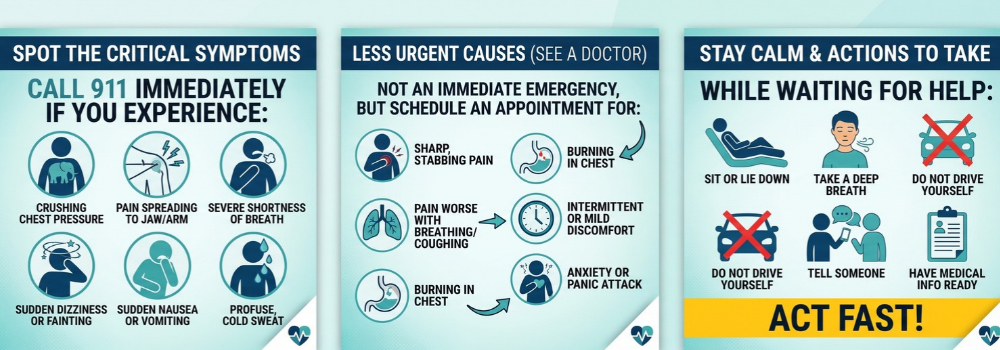
Call 911 immediately if chest pain occurs with:
- Shortness of breath
- Cold sweating
- Nausea or vomiting
- Fainting or near-fainting
- Severe dizziness or lightheadedness
- Pain spreading to the arm, shoulder, back, neck, jaw, or upper abdomen
- A fast or irregular heartbeat
- Sudden severe weakness
- Sudden severe chest pressure or squeezing
- Loss of consciousness
These symptoms can occur with a heart attack and other serious medical conditions.
Emergency care is also important if chest pain happens with significant breathing difficulty, fainting, sudden neurological symptoms, or signs that may suggest a blood clot.
For example, sudden sharp chest pain with shortness of breath can occur with a pulmonary embolism. The risk may be higher after prolonged immobility, a long trip, surgery, or another situation associated with blood clots. One-sided leg swelling can also be a warning sign.
Do not try to determine the cause yourself. Chest pain can have overlapping symptoms, and some serious conditions can initially appear mild.
Other Emergency Causes of Chest Pain
Heart attacks receive much of the attention, but they are not the only emergency cause of chest pain.
Pulmonary Embolism
A pulmonary embolism occurs when a blood clot blocks an artery in the lungs. Chest pain may be sudden and sharp. Shortness of breath can occur as well.
Some people may also experience rapid heart rate, dizziness, fainting, or coughing. Sudden chest pain with significant breathing difficulty requires emergency evaluation.
Aortic Dissection
The aorta is the body’s largest artery. A tear in its inner wall can cause sudden, severe pain in the chest or upper back.
This condition requires immediate emergency treatment. Sudden severe chest pain with severe upper back pain should not be watched at home.
Severe Lung Conditions
Pneumonia, pleurisy, and other lung conditions can cause chest discomfort. Some lung problems may also cause fever, cough, or pain that becomes worse when breathing.
Although not every lung-related chest pain is an emergency, severe breathing difficulty or rapidly worsening symptoms require immediate medical attention.
Pericarditis
Pericarditis involves inflammation of the tissue surrounding the heart. It can cause sharp chest pain that becomes worse with deep breathing, coughing, or lying down.
Even when the pain pattern sounds different from a heart attack, a healthcare professional may need to determine the cause.
When Chest Pain May Have a Less Serious Cause
Not every episode of chest pain means there is a heart problem. Chest discomfort can come from the muscles, digestive system, lungs, or other structures.
Common non-cardiac causes include:
- Muscle strain
- Chest wall inflammation
- Costochondritis
- Heartburn or acid reflux
- Esophageal irritation
- Anxiety or panic attacks
- Cough-related muscle soreness
- Respiratory infections
For example, chest wall pain may occur after heavy lifting, repeated coughing, exercise, or an injury. Costochondritis can cause tenderness near the breastbone.
Digestive problems can also create burning or discomfort behind the breastbone. Acid reflux may cause a sour taste or a sensation of stomach contents moving upward. Pain related to swallowing or meals may also point toward a digestive cause.
Still, these patterns do not provide a guaranteed diagnosis.
For example, heart-related chest discomfort can sometimes feel like indigestion. That is why new or unexplained chest pain should be evaluated instead of automatically being blamed on heartburn.
When Should You See a Doctor for Chest Pain?
Not every chest pain episode requires the emergency room. However, new or unexplained chest pain deserves medical attention.
Call a healthcare professional if you experience chest pain that keeps returning, even if it disappears between episodes. You should also seek medical evaluation if you are unsure why the pain is happening.
Recurring chest discomfort can sometimes be related to angina. Angina occurs when the heart does not receive enough blood and oxygen. It may appear during physical activity or stress and improve with rest. However, changes in a known angina pattern can be an emergency.
For example, seek urgent medical attention if your usual chest discomfort becomes more intense, occurs with less activity, lasts longer than usual, or begins while you are resting.
Do not assume that recurring symptoms are simply indigestion or muscle pain without discussing them with a healthcare professional.
What Can Cause Chest Pain?
Chest pain has many possible causes. The location, quality, timing, triggers, and associated symptoms can provide useful clues.
Heart-Related Causes
Heart-related causes include heart attack, angina, inflammation around the heart, and other cardiovascular conditions.
Heart-related pain may feel like pressure, squeezing, heaviness, or tightness. It may spread to other areas of the upper body. Shortness of breath, sweating, nausea, and dizziness may occur at the same time.
Digestive Causes
Acid reflux and other digestive conditions can cause burning or discomfort in the chest. Esophageal problems may also create chest pain.
Gallbladder problems and stomach conditions can sometimes cause pain in the upper abdomen or chest area.
Musculoskeletal Causes
Muscle strain can cause localized chest pain. It may follow exercise, lifting, coughing, or physical activity.
Chest wall pain may also become more noticeable when you move or press on the affected area. These clues can make a heart-related cause less likely, but they do not replace a medical evaluation when symptoms are new or concerning.
Lung-Related Causes
Respiratory infections, inflammation around the lungs, and blood clots can cause chest pain.
Chest pain that occurs with coughing or deep breathing may have a lung-related cause. However, sudden chest pain with shortness of breath requires prompt evaluation because serious conditions can present this way.
Anxiety and Panic
Anxiety and panic attacks can cause chest tightness, rapid heartbeat, sweating, dizziness, and shortness of breath.
These symptoms can feel very real and intense. However, it is important not to assume anxiety is the cause of new chest pain until serious medical causes have been considered.
Important Note
Chest pain that improves with rest is not automatically harmless. Some heart-related chest pain can occur during activity and improve with rest. If this pattern is new, recurrent, or changing, talk with a healthcare professional. If symptoms are severe or occur with emergency warning signs, call 911.
How Is Chest Pain Diagnosed?
There is no single test that explains every case of chest pain. The evaluation depends on your symptoms, medical history, physical examination, and risk factors.
A healthcare professional may ask:
- When did the pain begin?
- Where exactly do you feel it?
- What does the pain feel like?
- How long does each episode last?
- Does activity trigger it?
- Does breathing or movement change it?
- Does it occur after eating?
- Does the pain spread to another part of the body?
- Have you experienced this before?
- Do you have medical conditions or heart disease risk factors?
In an emergency setting, testing may include an electrocardiogram, blood tests, imaging, or other cardiac and lung evaluations. The specific tests depend on the suspected cause.
For example, an electrocardiogram can provide information about the heart’s electrical activity. Blood tests may help identify evidence of heart muscle injury. Other testing may be needed when a lung, blood vessel, or digestive cause is suspected.
The goal is not simply to determine whether the pain is uncomfortable. The goal is to identify or rule out potentially dangerous causes as quickly as possible.
If you have new or unexplained chest pain, do not delay emergency care because you are unsure whether your symptoms are serious. Mayo Clinic advises seeking emergency help for severe, new, or unexplained chest pain or pressure.
What Should You Do While Waiting for Emergency Help?
If you think you may be having a heart attack, call 911 immediately.
Then follow the instructions given by the emergency operator. Sit down and avoid unnecessary activity. If you have prescribed nitroglycerin, take it only as directed.
Do not drive yourself to the hospital if emergency transportation is available. Emergency medical professionals can begin assessment and care during transport.
Do not delay the emergency call to take aspirin. Aspirin may be appropriate for some people with a suspected heart attack, but it can also be unsafe in certain situations. Follow the advice of emergency medical professionals or your healthcare provider.
If someone with suspected cardiac symptoms becomes unconscious and is not breathing normally, call 911 and begin CPR if you are able. Hands-only CPR can be used by people who are not trained in full CPR.
Can Chest Pain Be Prevented?
Not every cause of chest pain can be prevented. However, many heart-related problems are connected with cardiovascular risk factors that can be managed.
Regular primary care visits can help identify conditions such as high blood pressure, diabetes, and high cholesterol. These conditions may not cause obvious symptoms early on.
Healthy habits also matter. Depending on your individual health needs, these may include staying physically active, avoiding tobacco, maintaining a healthy weight, eating a balanced diet, getting enough sleep, and taking prescribed medications as directed.
Regular medical care can also help monitor chronic conditions. Pearland Healthcare Center provides chronic disease management in Pearland for patients who need ongoing support for long-term health conditions.
People with high blood pressure can also benefit from regular monitoring. If you are concerned about elevated readings, you can learn more through the high blood pressure care available in Pearland.
Similarly, diabetes management is important for long-term cardiovascular health. Pearland Healthcare Center provides diabetes care in Pearland as part of its primary care services.
Chest Pain Care in Pearland
If you are experiencing severe, sudden, or unexplained chest pain, do not wait for a primary care appointment. Call 911 or your local emergency number.
For chest discomfort that has already been evaluated as non-emergency, or for recurring symptoms that need medical assessment, a primary care visit can help identify possible causes and determine whether additional testing is needed.
Pearland Healthcare Center provides primary care and walk-in services for patients in Pearland and surrounding communities. The clinic also provides chronic disease management, annual physical exams, preventive care, and other primary care services.
You can learn more about the clinic through the Pearland walk-in clinic page or review available medical services.
If you need a routine evaluation, you can also make an appointment at Pearland Healthcare Center.
Frequently Asked Questions About Chest Pain
When is chest pain an emergency?
Chest pain is an emergency when it is sudden, severe, new, unexplained, or associated with symptoms such as shortness of breath, sweating, nausea, dizziness, fainting, or pain spreading to the arm, back, neck, jaw, shoulder, or upper abdomen. Call 911 if you think you may be having a heart attack.
Should I call 911 for chest pain that goes away?
Yes, if the chest pain was new, unexplained, or accompanied by other warning signs. Heart attack discomfort can come and go. Do not assume that symptoms are harmless simply because they temporarily stop.
What does a heart attack feel like?
A heart attack may feel like pressure, squeezing, tightness, fullness, aching, or discomfort in the center of the chest. The sensation may spread to the arm, shoulder, back, neck, jaw, or upper abdomen. Shortness of breath, sweating, nausea, dizziness, and unusual fatigue may also occur.
Can heartburn feel like chest pain?
Yes. Acid reflux can cause burning chest discomfort and may feel similar to heart-related pain. However, heart-related problems can sometimes feel like indigestion or heartburn. New or unexplained chest pain should therefore be medically evaluated rather than automatically blamed on reflux.
Can anxiety cause chest pain?
Yes. Anxiety and panic attacks can cause chest tightness, rapid heartbeat, sweating, dizziness, and shortness of breath. However, new chest pain should not automatically be attributed to anxiety. Serious causes should be considered when symptoms are new or concerning.
Is chest pain from muscle strain serious?
Muscle strain can cause localized chest pain, especially after exercise, lifting, coughing, or an injury. Pain that changes with movement or pressure may suggest a chest wall cause. However, new or unexplained chest pain still deserves medical attention when the cause is uncertain.
Can chest pain be caused by high blood pressure?
High blood pressure often causes no noticeable symptoms. However, very serious cardiovascular problems can cause chest pain. If chest pain occurs with shortness of breath, neurological symptoms, severe weakness, or other emergency signs, call 911.
Should I drive myself to the hospital for chest pain?
If you think you may be having a heart attack or another medical emergency, call 911 instead of driving yourself. Emergency medical professionals can begin care during transport. Drive yourself only if there is no other option for getting emergency help.
Can chest pain happen without a heart attack?
Yes. Chest pain can result from digestive problems, muscle strain, anxiety, lung conditions, inflammation, and several other causes. Some of these conditions are harmless, while others can be emergencies. The symptoms and overall situation determine how urgently you need care.
When should I see a doctor for recurring chest pain?
See a healthcare professional for new or recurring chest pain, especially if you do not know what is causing it. Recurring symptoms can sometimes be related to heart disease or another condition that needs treatment. If symptoms become severe or occur with emergency warning signs, call 911 instead.
Final Thoughts: Do Not Ignore New Chest Pain
Chest pain does not always mean a heart attack. But you cannot safely determine the cause from the sensation alone.
New, sudden, severe, or unexplained chest pain deserves immediate attention. Chest pressure with shortness of breath, sweating, nausea, dizziness, fainting, or pain spreading to the upper body is especially concerning.
When in doubt, do not wait for the symptoms to become worse. Call 911 if you think you may be having a heart attack or another medical emergency.
Need Primary Care in Pearland?
For non-emergency symptoms, routine evaluations, chronic condition management, and preventive care, Pearland Healthcare Center provides primary care for patients in Pearland and surrounding communities.
Medical Disclaimer:
This article is for general educational purposes only and does not replace professional medical advice, diagnosis, or treatment. Chest pain can have many causes, including life-threatening conditions. If you have severe, sudden, new, or unexplained chest pain, or symptoms that may indicate a heart attack, call 911 or your local emergency number immediately.