



A stuffy nose can make it surprisingly hard to know what is actually going on. You may wake up congested, start sneezing, develop a headache, or notice pressure around your face. Is it a common cold? Could allergies be responsible? Or has a cold turned into a sinus infection?
Understanding the difference between a sinus infection vs cold can help you know what to watch for. It can also help you understand when allergy symptoms may be the real cause.

Important Note
Sinus infections, colds, and allergies can share many symptoms. Congestion alone cannot tell you which condition you have. Pay attention to symptom timing, facial pressure, itching, fever, and how long your symptoms last. If symptoms are severe, persistent, or getting worse, a healthcare professional can help determine the cause.
Table of Contents
- Sinus Infection vs Cold vs Allergies: What Is the Difference?
- What Does a Sinus Infection Feel Like?
- What Does a Common Cold Feel Like?
- What Do Allergy Symptoms Feel Like?
- Sinus Infection vs Cold Symptoms
- Does Green or Yellow Mucus Mean a Sinus Infection?
- How Long Do Colds, Allergies, and Sinus Infections Last?
- Can a Cold Turn Into a Sinus Infection?
- How Are Sinus Infections Diagnosed?
- How Are These Conditions Treated?
- Do You Need Antibiotics for a Sinus Infection?
- When Should You See a Doctor?
- Sinus and Cold Care in Pearland
- Frequently Asked Questions
Sinus Infection vs Cold vs Allergies: What Is the Difference?
The biggest difference comes down to the underlying cause.
A common cold is caused by a virus. It usually affects the nose and throat. Symptoms can include congestion, runny nose, sneezing, cough, sore throat, headache, mild body aches, and sometimes a low-grade fever.
A sinus infection, also called sinusitis, involves inflammation and swelling in the sinuses. Fluid can build up inside these air-filled spaces. Viruses are a common cause, especially after a cold. Some cases involve bacteria.
Allergies happen when the immune system reacts to an allergen. Common triggers include pollen, dust mites, mold, and pet dander. Allergies can cause sneezing, congestion, a runny nose, and watery or itchy eyes.
The confusing part is that these conditions overlap. A person with allergies can have severe congestion. A person with a cold can have sinus pressure. A person with sinusitis can have a runny nose and cough.
That is why the pattern matters more than one symptom.
What Does a Sinus Infection Feel Like?
A sinus infection can cause more than a blocked nose.
Common symptoms include nasal congestion, facial pressure, facial pain, headache, post-nasal drip, cough, sore throat, bad breath, and reduced sense of smell. Some people also experience tooth discomfort or pressure around the eyes.
Facial pressure can be especially noticeable around the forehead, cheeks, nose, or eyes. It may feel worse when you bend forward.
Acute sinusitis often develops after a viral upper respiratory infection. The inflammation makes it harder for mucus to drain normally. That can leave you feeling congested and uncomfortable.
However, having sinus pressure does not automatically mean you have a bacterial sinus infection. Many sinus infections are caused by viruses and improve without antibiotics.
Another important point is that the color of nasal mucus does not prove that bacteria are causing the illness. Yellow or green mucus can occur with viral infections as well.
What Does a Common Cold Feel Like?
A cold usually begins with symptoms affecting the nose and throat.
You may notice a scratchy throat first. Sneezing, runny nose, congestion, cough, headache, mild body aches, and tiredness can follow.
Some adults develop a low-grade fever. However, a high or persistent fever is less typical of an uncomplicated cold.
Cold symptoms often build over the first few days. Most people recover within about a week, although some symptoms, especially coughing, can last longer.
A cold can also lead to sinus inflammation. This is one reason the line between a sinus infection vs cold can become confusing.
If congestion and facial pressure continue or become worse instead of gradually improving, it may be time to speak with a healthcare professional.
A cold is caused by a virus. Antibiotics do not treat the viruses that cause common colds.
Rest, fluids, and appropriate symptom relief are often enough for an uncomplicated cold.
However, symptoms that become severe or develop an unusual pattern deserve medical attention.
What Do Allergy Symptoms Feel Like?
Allergies can look very similar to a cold.
Both can cause sneezing, congestion, and a runny nose. The biggest clues are often itching and timing.
Allergic rhinitis commonly causes an itchy nose, itchy eyes, itchy throat, repeated sneezing, watery eyes, and nasal congestion. Symptoms may appear after exposure to a specific trigger.
For example, you may notice symptoms after spending time around pets. You may also experience symptoms during periods of high pollen exposure.
Allergies can continue for weeks or return whenever you encounter the trigger. A cold usually follows a shorter illness pattern.
Fever also provides a useful clue. Fever is uncommon with seasonal allergies, while it can occur with a cold.
Itchy, watery eyes are particularly helpful when comparing allergies with a sinus infection. Itching is much more characteristic of allergies than sinusitis.
Still, allergies and sinus problems can occur together. Persistent allergic inflammation can contribute to nasal and sinus swelling.
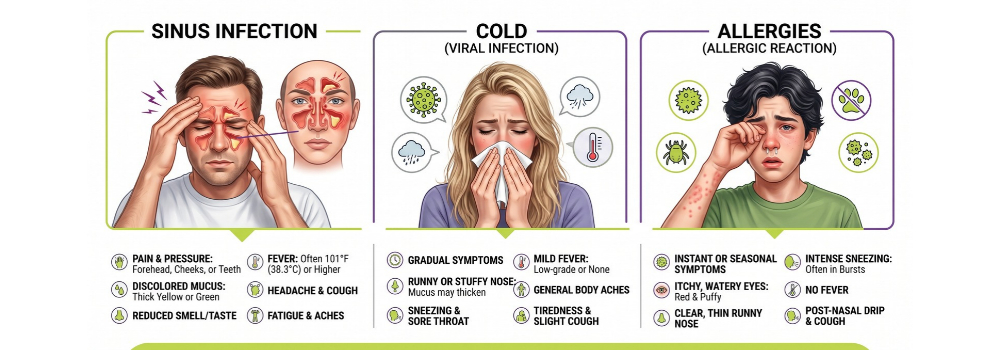
Sinus Infection vs Cold Symptoms: What Should You Look For?
When comparing a sinus infection vs cold, look at the entire symptom pattern.
Symptoms More Common With a Cold
- Runny or stuffy nose
- Sneezing
- Sore or scratchy throat
- Cough
- Mild headache
- Mild body aches
- Low-grade fever
- General tiredness
Symptoms More Suggestive of Sinusitis
- Facial pressure or pain
- Pressure around the cheeks, eyes, nose, or forehead
- Persistent nasal congestion
- Post-nasal drainage
- Headache
- Reduced sense of smell
- Bad breath
- Tooth discomfort or facial tenderness
- Symptoms that persist or worsen instead of improving
Symptoms More Typical of Allergies
- Repeated sneezing
- Itchy nose
- Itchy or watery eyes
- Runny nose
- Nasal congestion
- Symptoms that appear after exposure to a trigger
- Symptoms that return seasonally or repeatedly
These patterns are clues, not a substitute for a medical evaluation. Several conditions can produce similar symptoms.
Does Green or Yellow Mucus Mean a Sinus Infection?
This is one of the most common questions about sinus symptoms.
Not necessarily.
Nasal mucus can become thicker or change color during a viral respiratory infection. Yellow or green mucus does not automatically mean you have a bacterial infection.
Instead, healthcare professionals consider the entire illness pattern. They may look at how long symptoms have lasted, whether symptoms are improving, whether they became worse after initial improvement, and whether severe symptoms are present.
For this reason, mucus color alone should not determine whether someone takes antibiotics.
Important Note
Thick, yellow, or green mucus does not automatically mean you need antibiotics. Viral infections can also cause changes in mucus. The duration and overall pattern of symptoms are more useful when deciding whether medical evaluation is needed.
How Long Do Colds, Allergies, and Sinus Infections Last?
Duration can provide an important clue.
Common Cold
Most uncomplicated colds improve within about a week. Some symptoms may continue longer, especially a cough.
Allergies
Allergy symptoms can last as long as you remain exposed to the allergen. They may also return repeatedly during certain seasons.
Acute Sinusitis
Many cases of acute sinusitis improve within several days to a couple of weeks. A common cold is a frequent cause of acute sinus inflammation.
Symptoms that last more than about 10 days without improvement, become significantly worse after initially improving, or include severe symptoms may need medical evaluation.
Chronic sinusitis is different. Chronic sinusitis involves symptoms lasting at least 12 weeks despite treatment. Persistent symptoms should be evaluated rather than repeatedly treated as a simple cold.
Can a Cold Turn Into a Sinus Infection?
Yes, a cold can contribute to sinusitis.
During a cold, the nasal and sinus tissues can become swollen. This can interfere with normal mucus drainage. Fluid and mucus may then build up inside the sinuses.
Most acute sinus infections are still viral. However, some cases can develop a bacterial component.
This does not mean that every cold will turn into a bacterial sinus infection.
Instead, pay attention to what happens over time.
If you start feeling better and then suddenly become much worse, that change is worth discussing with a healthcare professional. The same is true when symptoms persist without improvement or become severe.
How Are Sinus Infections Diagnosed?
Most uncomplicated sinus infections can be diagnosed based on your symptoms and a physical examination.
Your healthcare provider may ask when the symptoms started. They may ask whether you initially had a cold. They may also ask about fever, facial pain, nasal drainage, cough, allergies, and previous sinus problems.
Your nose, throat, ears, and other relevant areas may be examined during the visit.
Imaging is not routinely needed for every uncomplicated sinus infection. Additional testing may be considered when symptoms are persistent, recurrent, severe, unusual, or complicated.
The goal is to determine what is actually causing the symptoms. A cold, allergies, viral sinusitis, bacterial sinusitis, and other conditions may require different approaches.
How Are These Conditions Treated?
Treatment for a Common Cold
Most common colds improve with time.
Rest and adequate fluids can help you stay comfortable while your body recovers. Depending on your health history, over-the-counter medicines may help with congestion, pain, fever, or cough.
Always follow the label instructions. If you take prescription medications or have chronic medical conditions, ask a healthcare professional or pharmacist before starting a new over-the-counter medicine.
Treatment for Allergies
Allergy treatment focuses on reducing exposure and controlling inflammation.
Depending on the type and severity of your allergies, treatment may include trigger avoidance, antihistamines, saline nasal rinses, or nasal corticosteroid sprays.
If symptoms repeatedly interfere with daily life, a healthcare professional can help determine whether additional allergy evaluation is appropriate.
Treatment for Sinusitis
Treatment depends on the cause and severity.
Many viral sinus infections improve without antibiotics. Saline nasal rinses, fluids, rest, and appropriate symptom-relief medicines may help you feel more comfortable.
When a bacterial infection is suspected, a healthcare professional may consider antibiotics.
The important point is to avoid assuming that every sinus infection requires an antibiotic. Unnecessary antibiotic use can cause side effects and contributes to antibiotic resistance.
Do You Need Antibiotics for a Sinus Infection?
Not every sinus infection needs antibiotics.
Many sinus infections are caused by viruses. Antibiotics work against certain bacteria, not viruses.
A healthcare professional may recommend observation or delayed antibiotic treatment in some situations. Other cases may require prescription treatment based on symptoms and clinical findings.
Do not start leftover antibiotics from a previous illness. The medication may not be appropriate for your current condition. Taking antibiotics when they are not needed can also cause unwanted side effects.
If your symptoms are persistent, severe, or worsening, a medical evaluation can help determine whether antibiotics or another treatment is appropriate.
When Should You See a Doctor?
Many mild colds and allergy symptoms can be managed at home. However, certain patterns deserve medical attention.
Consider contacting a healthcare professional if your symptoms are not improving, keep returning, or interfere with normal activities.
You should also seek medical evaluation if you develop significant facial pain, persistent fever, severe headache, breathing problems, or symptoms that become worse after initially improving.
Some symptoms require more urgent attention.
- Severe difficulty breathing
- Confusion or unusual changes in alertness
- Severe swelling or redness around the eyes
- Vision changes or double vision
- Severe headache with concerning symptoms
- Stiff neck with fever
- Very high or persistent fever
Serious complications from sinus infections are uncommon, but symptoms involving the eyes, vision, brain, or severe systemic illness should not be ignored.

Sinus and Cold Care in Pearland
If you live in Pearland and are dealing with persistent congestion, sinus pressure, cold symptoms, or recurring respiratory concerns, primary care can be a useful place to start.
Pearland Healthcare Center’s walk-in clinic provides convenient access to medical care for a range of non-emergency concerns.
A healthcare professional can review your symptoms and determine whether they are more consistent with a common cold, sinusitis, allergies, or another condition.
If symptoms are related to an ongoing health concern, chronic disease management in Pearland may also be available as part of continued primary care.
Patients can also use the clinic for physical exams in Pearland and other routine healthcare needs.
When you are unsure whether your symptoms need an appointment, you can make an appointment at Pearland Healthcare Center to discuss your concerns.
Frequently Asked Questions
How can I tell the difference between a sinus infection and a cold?
A cold commonly causes a runny or stuffy nose, sneezing, sore throat, cough, and mild body aches. Sinusitis is more likely to cause facial pressure, facial pain, persistent congestion, post-nasal drainage, headache, and reduced smell. Symptoms that persist or worsen may require medical evaluation.
Is a sinus infection worse than a cold?
Not necessarily. Many sinus infections are caused by viruses and improve without antibiotics. However, sinusitis can cause more noticeable facial pressure and congestion. The severity and duration of symptoms matter more than the name of the condition.
How do I know if my congestion is from allergies?
Itching is a useful clue. Allergies commonly cause itchy eyes, itchy nose, repeated sneezing, watery eyes, and a runny or stuffy nose. Symptoms may also appear after exposure to a specific allergen.
Can allergies cause a sinus infection?
Allergies can contribute to nasal and sinus inflammation. Swelling can interfere with normal drainage and may contribute to sinus problems. People with allergies can also experience symptoms that feel similar to sinusitis.
Does green mucus mean I have a sinus infection?
No. Green or yellow mucus can occur during viral respiratory infections as well. Mucus color alone cannot determine whether a sinus infection is bacterial or whether antibiotics are needed.
How long should a cold last before I see a doctor?
Most uncomplicated colds improve within about a week. Contact a healthcare professional if symptoms become worse, fail to improve, or are accompanied by significant fever, breathing problems, severe pain, or other concerning symptoms.
Can a sinus infection go away without antibiotics?
Yes. Many sinus infections are viral and improve without antibiotics. A healthcare professional can determine whether your symptoms suggest that additional treatment is necessary.
Can sinusitis cause a headache?
Yes. Sinusitis can cause headache and pressure around the forehead, cheeks, nose, or eyes. Facial pressure may become more noticeable when bending forward.
Can allergies cause sinus pressure?
Yes. Allergic inflammation can cause nasal congestion and pressure. However, severe or persistent facial pain should not automatically be blamed on allergies.
When should I worry about sinus symptoms?
Seek medical attention if symptoms are severe, persist without improvement, become worse after initially improving, or involve significant fever, breathing problems, eye swelling, vision changes, confusion, or a stiff neck.
Final Thoughts: Sinus Infection vs Cold vs Allergies
The difference between a sinus infection vs cold is not always obvious at first.
All three conditions can cause congestion, drainage, and sneezing. The pattern provides more useful information.
Colds are viral infections that usually improve with time. Allergies tend to follow exposure to specific triggers and often cause itching and watery eyes. Sinusitis can cause more noticeable facial pressure, congestion, drainage, headache, and reduced smell.
Remember that mucus color alone does not tell you whether you have a bacterial infection. Likewise, congestion does not automatically mean you have sinusitis.
If symptoms persist, worsen, repeatedly return, or become severe, getting evaluated can help you find the right cause and treatment.
Need Help With Persistent Sinus or Cold Symptoms?
Do not let ongoing congestion, sinus pressure, or recurring respiratory symptoms disrupt your daily life. Pearland Healthcare Center provides primary and walk-in care for many non-emergency health concerns.
Medical Disclaimer:
This article is intended for general educational purposes and does not replace professional medical advice, diagnosis, or treatment. Symptoms can have different causes, and individual treatment depends on your health history and clinical evaluation. Seek urgent or emergency medical care for severe or potentially life-threatening symptoms.