


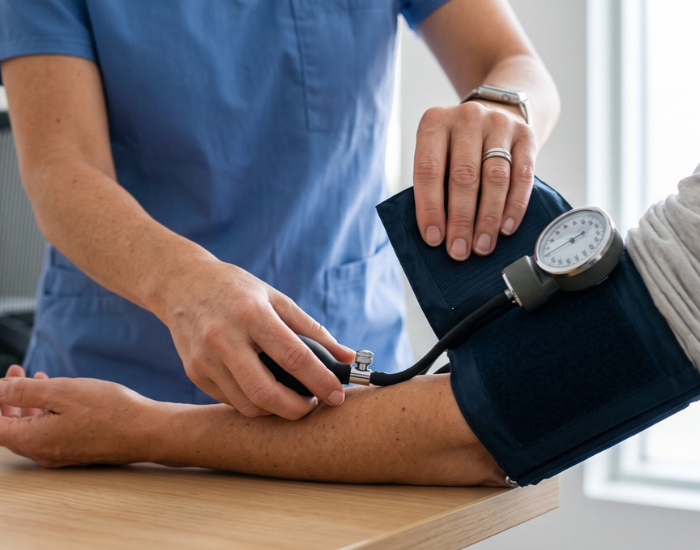
Seeing a blood pressure reading of 140/90, 160/100, or higher can be concerning. You may wonder whether the number is dangerous, whether you need treatment, or whether one high reading means you have high blood pressure.
The answer depends on more than one measurement. Blood pressure can change throughout the day. Stress, caffeine, physical activity, illness, medications, and even the way you sit during the measurement can affect the result.
Important Note
A blood pressure reading of 140/90 or 160/100 is higher than the normal range. It should not be ignored. However, one high reading does not automatically confirm a diagnosis of hypertension. A healthcare professional can evaluate repeated readings and your overall health.
Table of Contents
- What Do the Two Blood Pressure Numbers Mean?
- What Does a Blood Pressure of 140/90 Mean?
- What Does a Blood Pressure of 160/100 Mean?
- What If My Blood Pressure Is Higher Than 160/100?
- Understanding High Blood Pressure Categories
- Does One High Blood Pressure Reading Mean Hypertension?
- Can High Blood Pressure Cause Symptoms?
- When Should You Worry About a High Reading?
- How to Measure Blood Pressure Correctly at Home
- What Can Cause High Blood Pressure Readings?
- How Is High Blood Pressure Treated?
- How Can You Help Lower High Blood Pressure?
- High Blood Pressure Care in Pearland
- Frequently Asked Questions
What Do the Two Blood Pressure Numbers Mean?
Blood pressure is written as two numbers, such as 120/80 or 140/90.
The first number is called the systolic blood pressure. It measures pressure against your artery walls when your heart beats.
The second number is called the diastolic blood pressure. It measures pressure while your heart rests between beats.
Both numbers matter. If either number is consistently high, it may indicate hypertension.
For example, a reading of 140/80 has a high systolic number. A reading of 120/90 has a high diastolic number. Both situations deserve attention.
Blood pressure is measured in millimeters of mercury, written as mm Hg.
Understanding the numbers can help you recognize when a reading needs follow-up. It can also help you communicate more clearly with your healthcare provider.
What Does a Blood Pressure of 140/90 Mean?
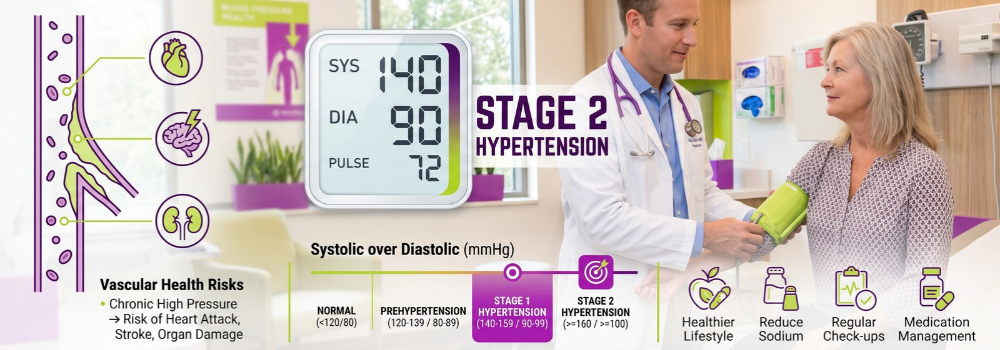
A blood pressure reading of 140/90 is considered Stage 2 hypertension under current American Heart Association categories. Stage 2 begins at a systolic pressure of 140 or higher or a diastolic pressure of 90 or higher.
That does not mean a single 140/90 reading proves that you have chronic high blood pressure.
Instead, it means the reading is high enough to deserve medical attention and follow-up.
Your provider may want to repeat the measurement. They may also ask you to monitor your blood pressure at home.
Home readings can provide useful information about your blood pressure outside the medical office. They can also help identify patterns over time.
If your readings repeatedly stay around 140/90 or higher, talk with a healthcare professional. Do not simply assume the number will eventually return to normal.
What Does a Blood Pressure of 160/100 Mean?
A blood pressure reading of 160/100 is also within the Stage 2 hypertension range.
Both numbers are elevated. The systolic pressure is 160. The diastolic pressure is 100.
This is higher than 140/90 and should receive medical attention, particularly if similar readings occur repeatedly.
However, 160/100 is not the same as a hypertensive emergency. Current American Heart Association guidance uses a threshold above 180/120 mm Hg for severe hypertension and hypertensive emergency concerns. Symptoms are especially important at that level.
If you repeatedly see readings around 160/100, schedule an evaluation. Your healthcare provider can review your measurements, medications, health history, and risk factors.
What If My Blood Pressure Is Higher Than 160/100?
Higher readings deserve closer attention.
A reading that is above 160/100 is still within the Stage 2 hypertension range. The next step depends on how high the reading is and whether you have symptoms.
If the reading approaches or exceeds 180/120, sit quietly and repeat the measurement after at least one minute. If it remains that high, contact a healthcare professional promptly.
If the reading is above 180/120 and you also have symptoms such as chest pain, shortness of breath, weakness, numbness, vision changes, severe back pain, or difficulty speaking, call 911.
These symptoms can indicate a medical emergency. Do not wait for the blood pressure to come down on its own.
When a High Number Needs Immediate Attention
Blood pressure higher than 180/120 mm Hg with concerning symptoms requires emergency medical attention. Symptoms can include chest pain, shortness of breath, weakness, numbness, vision changes, severe back pain, or difficulty speaking.
If you experience these symptoms, call 911 rather than driving yourself to a clinic.
Understanding High Blood Pressure Categories
Knowing the general blood pressure categories can make your readings easier to understand.
- Normal: Less than 120/80 mm Hg.
- Elevated: Systolic pressure from 120 to 129 mm Hg with diastolic pressure below 80.
- Stage 1 hypertension: Systolic pressure from 130 to 139 or diastolic pressure from 80 to 89.
- Stage 2 hypertension: Systolic pressure of 140 or higher or diastolic pressure of 90 or higher.
- Severe hypertension: Blood pressure higher than 180/120 mm Hg.
These categories help healthcare professionals understand the level of concern. They are not a substitute for an individual medical evaluation.
It is also important to remember that blood pressure is not fixed. Your numbers can change from one measurement to another.
Does One High Blood Pressure Reading Mean Hypertension?
Not necessarily.
A single high reading can happen for many reasons. Stress, recent exercise, caffeine, smoking, pain, illness, or an incorrect measurement technique can affect your result.
That is why your healthcare provider may look at multiple readings instead of relying on one measurement.
Home monitoring can also provide a clearer picture. The American Heart Association recommends taking two readings about one minute apart when checking blood pressure at home. Recording the results can help your healthcare professional identify patterns.
Some people also experience white coat hypertension. This means their blood pressure is higher in a medical setting than it is outside the office.
Others have the opposite pattern, known as masked hypertension. Their office reading may look normal while their blood pressure is higher at home.
For that reason, your provider may consider both office and home readings when evaluating your blood pressure.
Can High Blood Pressure Cause Symptoms?
Often, high blood pressure causes no obvious symptoms.
That is one reason hypertension can go unnoticed for years. A person may feel completely normal while their blood pressure remains elevated.
Regular blood pressure checks are therefore important. Measuring your blood pressure is one of the main ways to identify hypertension.
Very high blood pressure can become more concerning when it occurs with symptoms such as chest pain, shortness of breath, weakness, numbness, vision changes, or difficulty speaking.
Do not assume that you must have symptoms before high blood pressure matters. Repeated elevated readings still deserve medical attention.
When Should You Worry About a High Reading?
The answer depends on the number, whether it remains high, and whether you have symptoms.
140/90 or Higher
A reading of 140/90 or higher falls into Stage 2 hypertension. If this happens repeatedly, arrange an appointment with a healthcare professional.
160/100 or Higher
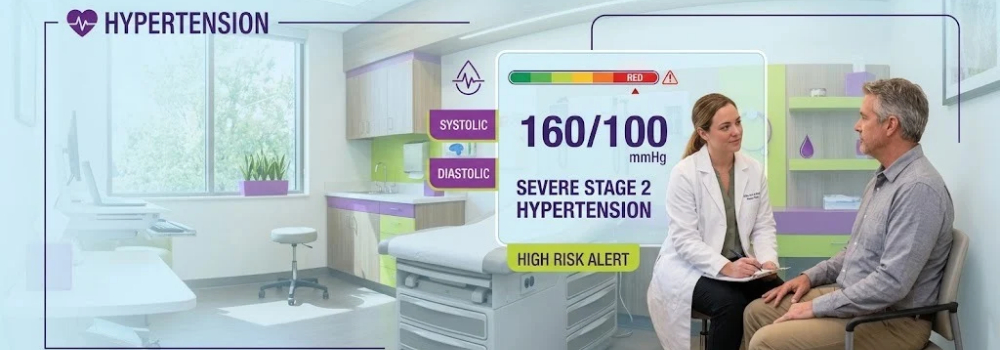
A repeated reading around 160/100 is significantly elevated. It should be evaluated rather than ignored.
Higher Than 180/120
Repeat the measurement after at least one minute. If it remains above 180/120, contact your healthcare professional promptly.
If you also have chest pain, shortness of breath, weakness, numbness, vision changes, severe back pain, or difficulty speaking, call 911.
How to Measure Blood Pressure Correctly at Home
Incorrect technique can affect your blood pressure reading. A few simple steps can make your measurements more reliable.
Use an automatic, upper-arm blood pressure monitor with the correct cuff size. Wrist and finger monitors are generally less reliable than validated upper-arm devices.
Before measuring, avoid smoking, caffeine, and exercise for about 30 minutes. Empty your bladder before taking the reading.
Sit quietly for at least five minutes. Keep your back supported and both feet flat on the floor. Do not cross your legs.
Place your bare upper arm on a flat surface. Keep the arm supported at heart level.
Do not talk during the measurement. Take two readings about one minute apart and record both results.
Bring your home monitor to a medical appointment when possible. Your healthcare professional can check whether the device is giving accurate results and whether you are using it correctly.
What Can Cause High Blood Pressure Readings?
High blood pressure can develop for many reasons. Some factors can be changed, while others cannot.
Common factors associated with higher blood pressure include excess sodium intake, physical inactivity, excess body weight, smoking, alcohol use, poor sleep, and certain health conditions.
Some medications can also raise blood pressure. Certain over-the-counter pain relievers and decongestants may affect blood pressure in some people.
Stress can temporarily increase blood pressure as well. However, repeated high readings should not simply be blamed on stress without proper evaluation.
Your healthcare provider can review your health history and medications. They can also determine whether additional testing is appropriate.
How Is High Blood Pressure Treated?
Treatment depends on your blood pressure level, health history, risk factors, and other medical conditions.
For some people, treatment begins with lifestyle changes. These may include improving nutrition, becoming more physically active, managing weight, limiting sodium, avoiding tobacco, and improving sleep.
Some people also need prescription medication.
For Stage 2 hypertension, the American Heart Association recommends blood pressure medication along with lifestyle changes. Your healthcare professional can determine which treatment is appropriate for you.
Do not stop or change blood pressure medication without discussing it with your healthcare professional.
High blood pressure treatment is often a long-term process. The goal is not simply to lower one reading. It is to manage blood pressure consistently and reduce the risk of complications.
How Can You Help Lower High Blood Pressure?
Daily habits can play an important role in blood pressure management.
Choose a Heart-Healthy Eating Pattern
Focus on vegetables, fruits, whole grains, lean proteins, and other nutrient-rich foods. Pay attention to sodium intake, especially if your healthcare professional recommends reducing it.
Stay Physically Active
Regular physical activity can support cardiovascular health. Ask your healthcare professional what level of exercise is appropriate for you.
Maintain a Healthy Weight
If you have overweight or obesity, gradual weight management may support healthier blood pressure levels.
Pearland Healthcare Center also provides medical weight loss services in Pearland for patients who may benefit from professional support.
Avoid Tobacco
Smoking can negatively affect your heart and blood vessels. Avoiding tobacco is an important part of cardiovascular health.
Monitor Your Blood Pressure
Tracking your numbers can help you and your healthcare professional recognize patterns. It can also show whether lifestyle changes or treatment are working.
High Blood Pressure Care in Pearland
If you are repeatedly seeing readings such as 140/90, 150/90, 160/100, or higher, consider discussing them with a healthcare professional.
Pearland Healthcare Center provides primary care and chronic disease management for patients in Pearland and surrounding communities.
The clinic can evaluate health concerns and help patients understand their blood pressure readings. Ongoing care can also help monitor conditions that may affect cardiovascular health.
Patients can learn more about high blood pressure care in Pearland or explore chronic disease management services.
Regular physical examinations can also provide an opportunity to monitor blood pressure and other important health measurements. Learn more about physical exams in Pearland.
If you need an appointment, you can also use the Pearland Healthcare Center appointment page.
Do Not Ignore Repeated High Readings
High blood pressure often does not cause noticeable symptoms. That does not make it harmless. If your readings repeatedly reach 140/90, 160/100, or higher, keep a record and discuss the results with a healthcare professional.
Frequently Asked Questions
Is 140/90 considered high blood pressure?
Yes. Under current American Heart Association categories, 140/90 falls within Stage 2 hypertension. A healthcare professional should evaluate repeated readings rather than diagnosing hypertension from one measurement alone.
Is 160/100 dangerous?
160/100 is significantly high and falls within Stage 2 hypertension. It should not be ignored, especially if readings remain at this level. It is not, by itself, the same as a hypertensive emergency. Emergency concerns generally involve readings above 180/120, particularly when serious symptoms are present.
What should I do if my blood pressure is 140/90?
Repeat the measurement using proper technique and record the result. If readings continue to be around 140/90 or higher, contact your healthcare professional for evaluation.
What should I do if my blood pressure is 160/100?
Repeat the measurement after resting quietly and record the result. If readings remain around 160/100, arrange a medical evaluation. Your healthcare professional can determine whether lifestyle changes, medication, or additional monitoring are needed.
Is 160/100 an emergency?
Not necessarily. A reading of 160/100 is high, but the emergency threshold generally involves blood pressure above 180/120 with concerning symptoms. If your blood pressure is above 180/120 and you have chest pain, breathing problems, weakness, numbness, vision changes, severe back pain, or difficulty speaking, call 911.
Can stress cause a blood pressure reading of 160/100?
Stress can temporarily raise blood pressure. However, repeated readings of 160/100 should not automatically be attributed to stress. Persistent high readings deserve medical evaluation.
Should I check my blood pressure at home?
Home monitoring can be useful for people with high blood pressure. Use a validated automatic upper-arm monitor with the correct cuff size. Take two readings about one minute apart and record the results.
How often should I check my blood pressure?
The right schedule depends on your health and treatment plan. Ask your healthcare professional how often you should monitor your blood pressure. If you have already been diagnosed with hypertension, regular home monitoring can help track your response to treatment.
Can high blood pressure cause headaches?
High blood pressure often has no noticeable symptoms. A headache alone does not tell you whether your blood pressure is high. The only reliable way to know your blood pressure is to measure it.
When should I call 911 for high blood pressure?
If your blood pressure is above 180/120 and you have symptoms such as chest pain, shortness of breath, weakness, numbness, vision changes, severe back pain, or difficulty speaking, call 911 immediately.
Take Your Blood Pressure Numbers Seriously
A reading of 140/90 or 160/100 does not automatically mean you are experiencing a medical emergency. However, these numbers are high enough to deserve attention.
Do not rely on how you feel alone. High blood pressure often develops without obvious symptoms.
Instead, measure your blood pressure correctly, keep track of repeated readings, and discuss persistent elevations with a healthcare professional.
Understanding your numbers is an important first step toward protecting your heart, blood vessels, kidneys, brain, and overall health.
Need Help With High Blood Pressure?
If you are concerned about repeated high blood pressure readings, Pearland Healthcare Center can help you understand your numbers and discuss appropriate next steps.
Medical Disclaimer:
This article is for general educational purposes and does not replace professional medical advice, diagnosis, or treatment. Blood pressure concerns should be evaluated by a qualified healthcare professional. If you have a blood pressure reading above 180/120 with symptoms of a medical emergency, call 911.