


When you suddenly feel sick or get hurt, one of the hardest questions can be surprisingly simple: Where should I go? A walk-in clinic, urgent care center, emergency room, or your regular primary care provider may all seem like reasonable choices, especially when you are dealing with pain, fever, an injury, or symptoms that appeared unexpectedly.

Table of Contents
- Walk-In Clinic vs Urgent Care vs ER: What Is the Difference?
- When Should You Go to a Walk-In Clinic?
- When Is Urgent Care the Right Choice?
- When Should You Go to the Emergency Room?
- Which Symptoms Belong Where?
- A Medical Visit Does Not Always Mean an Emergency
- Where Does Primary Care Fit In?
- What Happens When You Visit a Walk-In Clinic or Urgent Care?
- How Are Common Problems Treated?
- When Should You Stop Waiting and Seek Emergency Care?
- How Can You Reduce Unnecessary Emergency Room Visits?
- Finding Medical Care in Pearland, Texas
- Frequently Asked Questions
- Medical Disclaimer
Important Note
Choosing the right type of medical care can feel stressful when you are sick, injured, or worried about someone you love. The good news is that you do not have to treat every medical problem like an emergency. Understanding what a walk-in clinic, urgent care center, primary care practice, and emergency room are designed to handle can help you seek appropriate care without unnecessarily delaying treatment for a serious condition.
Walk-In Clinic vs Urgent Care vs ER: What Is the Difference?
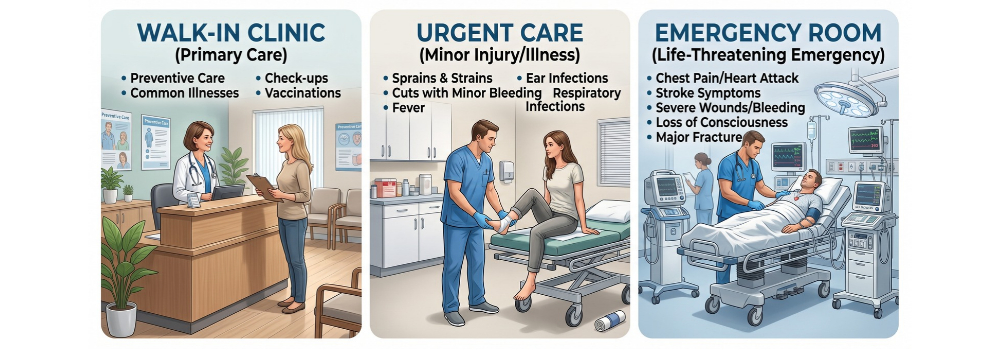
The simplest way to understand the difference is to consider how serious and time-sensitive the medical problem is. A walk-in clinic or primary care clinic can often evaluate common illnesses, minor injuries, preventive health concerns, and other problems that need medical attention but are not life-threatening. Urgent care is generally intended for conditions that need prompt attention but are not usually emergencies. The emergency room is designed for potentially life-threatening or rapidly worsening conditions that require immediate evaluation and access to hospital-level resources.
There can be some overlap. For example, a walk-in clinic and urgent care may both evaluate a minor injury, fever, sore throat, cough, or urinary symptoms. The important distinction is not simply whether you can walk into the facility. It is whether the facility has the appropriate level of care for what you are experiencing.
Another important factor is timing. If your symptoms are uncomfortable but stable, a same-day clinic visit may be appropriate. If you have severe chest pressure, significant difficulty breathing, symptoms of a stroke, uncontrolled bleeding, or another potentially life-threatening problem, waiting for a clinic appointment is not appropriate.
In other words, the question is not always, “Which facility is better?” It is, “What level of medical care does this situation require right now?”
When Should You Go to a Walk-In Clinic?
A walk-in clinic can be a practical option when you need medical attention without a scheduled appointment and your symptoms are not life-threatening. These clinics can be especially useful when your primary care provider is unavailable or when you need evaluation for a common health concern that cannot reasonably wait several days.
For example, a person who develops a sore throat, cough, mild fever, ear discomfort, minor skin problem, or another uncomplicated illness may benefit from a walk-in medical evaluation. A clinic may also be appropriate for certain minor injuries, vaccinations, physical examinations, screening services, and other routine healthcare needs.
The exact services vary from one clinic to another, so it is worth checking what the facility can provide before arriving. Some walk-in clinics have on-site testing and diagnostic capabilities that allow clinicians to evaluate common illnesses without sending every patient elsewhere.
Common reasons people visit a walk-in clinic
Patients may visit a walk-in clinic for respiratory symptoms, minor infections, mild injuries, medication concerns, preventive care, sports physicals, immunizations, flu shots, and screenings. Some clinics also provide ongoing primary care, not just occasional sick visits.
At Pearland Healthcare Center, services include chronic disease management, annual physicals, ADHD evaluation and treatment, COPD and asthma care, ear irrigation, and wart or skin-tag removal.
If you are unsure whether a clinic can treat your concern, call the office first. Describing your symptoms can help staff determine whether the clinic is equipped to evaluate you.
The key point: A walk-in clinic is generally appropriate for medical concerns that need attention but do not appear to be immediately life-threatening.

When Is Urgent Care the Right Choice?
Urgent care is designed for medical problems that need prompt attention but are not severe enough for the emergency room. It can help when a problem should not wait for a routine appointment but does not threaten your life or immediate safety.
Examples include painful minor injuries, suspected uncomplicated infections, high fever without severe warning signs, and worsening illnesses. The right setting depends on your age, medical history, symptoms, severity, and available services.
The difference between walk-in clinic vs urgent care can sometimes be confusing. Clinic names do not always show what conditions they treat. Some primary care clinics offer walk-in visits and same-day care. Some urgent care centers also provide broader diagnostic services.
Instead of focusing only on the clinic label, consider your symptoms and needs. A stable condition may be appropriate for a walk-in or primary care clinic. Urgent care may be suitable when you need faster attention and your regular provider is unavailable. If the condition could be life-threatening, seek emergency care immediately.
Urgent care is not the same as emergency care
One common misunderstanding is that “urgent” means “emergency.” It does not. Urgent care treats conditions that need timely attention but usually do not require an emergency department’s full resources.
If you have severe breathing problems, sudden confusion, possible stroke symptoms, severe chest pressure, or another life-threatening condition, do not rely on urgent care. Seek emergency medical help immediately.
When Should You Go to the Emergency Room?
The emergency room is the appropriate setting when symptoms may indicate a serious or life-threatening medical problem. Emergency departments are equipped to evaluate severe illness and injuries and can provide access to hospital-based testing, specialists, procedures, and other resources that outpatient clinics generally do not have.
Some symptoms should immediately change the decision from “Which clinic should I visit?” to “How quickly can I get emergency medical help?”
Seek emergency medical attention for symptoms such as severe difficulty breathing, signs of a heart attack, signs of a stroke, severe or sudden neurological changes, uncontrolled bleeding, serious trauma, loss of consciousness, severe allergic reactions, or other symptoms that appear potentially life-threatening.
For a suspected emergency, call 911 or your local emergency service rather than attempting to drive yourself if doing so could put you or others at risk.
What are possible warning signs of a heart attack?
Heart attack symptoms can vary. Chest pressure, squeezing, fullness, or pain may occur, but some people experience shortness of breath, sweating, nausea, unusual weakness, or pain involving the arm, shoulder, back, neck, or jaw. Women, older adults, and people with diabetes may sometimes have less typical symptoms.
When symptoms could represent a heart attack, do not wait to see whether they disappear on their own. Emergency evaluation is important because treatment may be time-sensitive.
What are possible warning signs of a stroke?
Sudden facial drooping, weakness or numbness on one side of the body, difficulty speaking or understanding speech, sudden vision problems, sudden severe dizziness, or trouble walking can be warning signs of a stroke.
Stroke treatment can be highly time-sensitive. If these symptoms develop suddenly, call 911 rather than driving to a walk-in clinic or waiting for a routine appointment.
Which Symptoms Belong Where?
There is no universal symptom checklist that can determine the correct facility for every person. The same symptom can represent a minor illness in one patient and a serious condition in another. Severity, duration, age, underlying medical conditions, medications, and how quickly symptoms are changing all matter.
Consider fever as an example. A mild fever accompanying an uncomplicated viral illness may be manageable through outpatient care. However, a very high or persistent fever accompanied by confusion, severe weakness, difficulty breathing, stiff neck, dehydration, seizures, or other concerning symptoms may require urgent or emergency evaluation.
The same principle applies to abdominal pain. Mild, short-lived discomfort may be appropriate for evaluation in a clinic. Severe or rapidly worsening abdominal pain, especially when accompanied by fainting, persistent vomiting, blood in the stool, significant abdominal swelling, or other concerning symptoms, may require a higher level of care.
Chest pain
Chest pain deserves particular caution. Not every episode of chest discomfort is caused by a heart problem, but it is not always possible to determine the cause safely without medical evaluation.
New, severe, persistent, pressure-like, or unexplained chest discomfort should be taken seriously, particularly when it occurs with shortness of breath, sweating, nausea, dizziness, fainting, or pain spreading to the arm, jaw, back, or shoulder.
Breathing problems
Mild respiratory symptoms from a cold may be managed in an outpatient setting. Significant difficulty breathing is different. If someone is struggling to breathe, cannot speak normally because of breathlessness, has bluish lips or skin, or is rapidly worsening, emergency medical attention is warranted.
Minor injuries
A small cut, mild sprain, or uncomplicated minor injury may be appropriate for a walk-in clinic or urgent care facility, depending on the available services. Severe bleeding, major trauma, a suspected spinal injury, loss of consciousness, or a serious head injury may require emergency evaluation.
Important Note
Not every concerning symptom means something dangerous is happening, and many common medical problems have straightforward explanations. At the same time, trying to diagnose yourself from an internet search can create unnecessary anxiety or cause you to overlook an important warning sign. If symptoms are severe, rapidly worsening, unusual for you, or accompanied by emergency warning signs, seek professional medical evaluation rather than waiting for the symptoms to become clearer.
Where Does Primary Care Fit In?
Primary care is not simply the place to go when you are sick. It is the foundation of ongoing healthcare. A primary care clinician can monitor chronic conditions, provide preventive care, review medications, perform physical examinations, evaluate new symptoms, and help coordinate care when a specialist or hospital evaluation is needed.
For patients who frequently use urgent care because they cannot get timely appointments, establishing a relationship with a primary care clinic can be particularly useful. Your clinician has the opportunity to understand your medical history, previous test results, medications, risk factors, and long-term health goals.
Primary care can also help distinguish a recurring symptom from an isolated illness. For example, repeated headaches, persistent fatigue, changes in weight, ongoing digestive symptoms, elevated blood pressure, or recurring respiratory problems may deserve a broader evaluation rather than repeated treatment of individual episodes.
A primary care clinic may also provide preventive services such as annual physical examinations, immunizations, health screenings, and chronic disease monitoring.
What Happens When You Visit a Walk-In Clinic or Urgent Care?
When you arrive, the healthcare team will generally begin by gathering information about your symptoms and medical history. Depending on the problem, this may include checking vital signs, asking when symptoms started, reviewing medications, performing a physical examination, and deciding whether diagnostic testing is appropriate.
The evaluation is guided by the problem you are experiencing. Someone with a sore throat may need an examination and possibly testing for certain infections. Someone with respiratory symptoms may need their lungs evaluated. A patient with a minor injury may require an examination of the affected area and, depending on the facility and injury, imaging or another diagnostic test.
One of the most useful things you can do before the visit is describe your symptoms clearly. Instead of simply saying, “I feel bad,” explain what you are feeling, when it started, whether it is getting better or worse, what makes it better or worse, and whether you have experienced related symptoms.
Bring an updated medication list when possible. If you have allergies, chronic medical conditions, recent test results, or information from another healthcare provider that may be relevant, having those details available can also make the evaluation more efficient.
How Are Common Problems Treated?
Treatment depends entirely on the diagnosis. A healthcare professional may recommend supportive care, prescribe medication when appropriate, provide a vaccination, perform a minor procedure, manage an existing chronic condition, or recommend additional testing or follow-up.
Antibiotics, for example, are not appropriate for every sore throat, cough, or fever. Many respiratory illnesses are caused by viruses, which do not respond to antibiotics. A clinician can evaluate the symptoms and determine whether testing or prescription treatment is appropriate.
Similarly, pain does not automatically mean that stronger medication is necessary. The goal is to identify the underlying cause and choose treatment that addresses the problem safely.
Sometimes the most important part of an outpatient visit is determining that a patient needs a higher level of care. If the clinician identifies warning signs that require hospital evaluation, the appropriate next step may be referral to an emergency department rather than continuing treatment in the clinic.
When Should You Stop Waiting and Seek Emergency Care?
If symptoms are getting substantially worse, new serious symptoms appear, or you feel that something is seriously wrong, do not rely solely on an online symptom comparison to decide what to do.
Emergency evaluation is particularly important for symptoms involving breathing, circulation, consciousness, severe neurological changes, major trauma, or uncontrolled bleeding. A person who suddenly becomes difficult to wake, develops severe breathing difficulty, has signs of a stroke, experiences severe chest pressure, or has a serious injury should receive emergency medical attention.
Parents and caregivers should also pay attention to significant changes in a child’s behavior, breathing, responsiveness, hydration, or appearance. Infants, older adults, and people with significant underlying health conditions can sometimes become seriously ill without presenting with the classic symptoms people expect.
When in doubt about a potentially life-threatening emergency, calling 911 is safer than trying to determine the diagnosis yourself.
How Can You Reduce Unnecessary Emergency Room Visits?
One way to make healthcare decisions easier is to have a primary care relationship before you become sick. Regular visits allow health problems to be identified earlier and provide a place to discuss symptoms that are concerning but not emergencies.
Preventive care matters as well. Keeping vaccinations current, managing conditions such as high blood pressure and diabetes, maintaining recommended screenings, taking medications as prescribed, and discussing recurring symptoms with a healthcare professional can all support long-term health.
It can also help to know what services your local clinic offers. If a practice provides walk-in appointments, testing, physical examinations, chronic disease management, and preventive services, you may have more options when an unexpected health concern occurs.
However, avoiding an unnecessary emergency-room visit should never mean avoiding emergency care when serious symptoms are present. The goal is appropriate care, not simply choosing the least intensive option.
Finding Medical Care in Pearland, Texas
For residents of Pearland and surrounding communities, knowing where to turn before an illness or injury occurs can make an unexpected medical situation less stressful. Pearland Healthcare Center’s walk-in clinic provides outpatient medical services for patients who need evaluation without relying solely on a scheduled routine visit.
The practice also provides physical examinations, chronic disease management, preventive services, and other primary care services. Patients looking for ongoing healthcare can learn more about the clinic’s medical services and available care options.
For patients managing conditions such as diabetes or high blood pressure, ongoing medical care can be an important part of reducing health risks over time. Pearland Healthcare Center provides dedicated information about its diabetes care and high blood pressure care.
If you need to arrange a visit, you can review the appointment options at Pearland Healthcare Center. The practice is located at 2404 Smith Ranch Rd., Suite 200, Pearland, TX 77584.
Need Medical Care in Pearland?
If you have a non-emergency health concern that needs medical attention, Pearland Healthcare Center offers walk-in and primary care services for patients in Pearland and surrounding communities.
Frequently Asked Questions
What is the difference between a walk-in clinic and urgent care?
A walk-in clinic generally provides outpatient medical care without requiring a scheduled appointment, while urgent care is typically intended for medical problems that need prompt attention but are not life-threatening. The exact services vary by facility, so check with the clinic about what it can evaluate and treat.
Should I go to a walk-in clinic or urgent care for a fever?
It depends on the severity of the fever and the other symptoms involved. A stable illness with a mild or moderate fever may be appropriate for outpatient evaluation. Fever accompanied by severe breathing problems, confusion, seizures, severe weakness, stiff neck, significant dehydration, or other serious symptoms may require emergency care.
When should I go to the ER instead of urgent care?
Go to the emergency room for potentially life-threatening symptoms such as severe difficulty breathing, severe chest pressure, signs of a stroke, uncontrolled bleeding, loss of consciousness, major trauma, severe allergic reactions, or other rapidly worsening conditions. Call 911 when the situation may be an emergency.
Can a walk-in clinic treat minor injuries?
Many walk-in clinics can evaluate certain minor injuries, although available services differ between facilities. More serious injuries, uncontrolled bleeding, major trauma, suspected spinal injuries, or injuries involving loss of consciousness may require emergency evaluation.
Is a walk-in clinic the same as a primary care clinic?
Not necessarily. A primary care clinic focuses on ongoing healthcare, preventive services, chronic disease management, and evaluation of new health concerns. Some primary care clinics also offer walk-in or same-day services, which can make them useful for both routine and unexpected medical needs.
Can I go to a walk-in clinic without an appointment?
Many walk-in clinics accept patients without scheduled appointments, but policies differ. It is a good idea to contact the clinic beforehand to confirm availability, services, insurance information, and current walk-in procedures.
Should I go to urgent care for chest pain?
New, severe, persistent, pressure-like, or unexplained chest pain can be an emergency, especially when accompanied by shortness of breath, sweating, nausea, dizziness, fainting, or pain involving the arm, jaw, back, or shoulder. When a heart attack or another serious condition is possible, call 911 rather than going to urgent care yourself.
What should I bring to a walk-in clinic?
Bring a photo ID, insurance information if applicable, a list of current medications, information about medication allergies, and relevant medical records when available. Be prepared to explain when your symptoms began and whether they have changed.
How do I know if my symptoms are serious?
Severity, how quickly symptoms develop, and whether important body functions are affected all matter. Severe breathing difficulty, sudden neurological changes, loss of consciousness, uncontrolled bleeding, severe chest symptoms, and major trauma are examples of situations that require emergency attention.
Can a walk-in clinic replace my primary care doctor?
A walk-in clinic can provide useful care for immediate or short-term medical concerns, but ongoing primary care is important for preventive healthcare, chronic disease management, medication monitoring, and understanding your overall health history.
Medical Disclaimer
This article is for general educational purposes only and does not replace professional medical advice, diagnosis, or treatment. Symptoms can have different causes, and the appropriate level of care depends on individual circumstances. If you believe you are experiencing a medical emergency, call 911 or seek emergency medical care immediately.