



Losing weight can be a healthy goal when it happens through planned changes in diet, exercise, or lifestyle. But what if the number on the scale keeps dropping and you are not trying to lose weight?
Unexplained weight loss can be easy to overlook at first. You may notice that your clothes fit differently or that your appetite has changed. Sometimes, the weight loss is the first visible sign that something else is happening inside the body.
So, when is unexplained weight loss a reason to see a doctor? A useful rule of thumb is to seek medical advice if you lose more than about 5% of your body weight within 6 to 12 months without trying. For some people, especially older adults or those with ongoing health conditions, a smaller change may also deserve attention.

Important Note
Unexplained weight loss is a symptom, not a diagnosis. It can have many causes, ranging from changes in appetite and medications to diabetes, thyroid disease, digestive disorders, infections, mental health conditions, and cancer. Losing weight without trying does not automatically mean you have a serious disease. However, persistent or significant weight loss should be evaluated by a healthcare professional.
Table of Contents
- What Is Unexplained Weight Loss?
- How Much Unintentional Weight Loss Is Concerning?
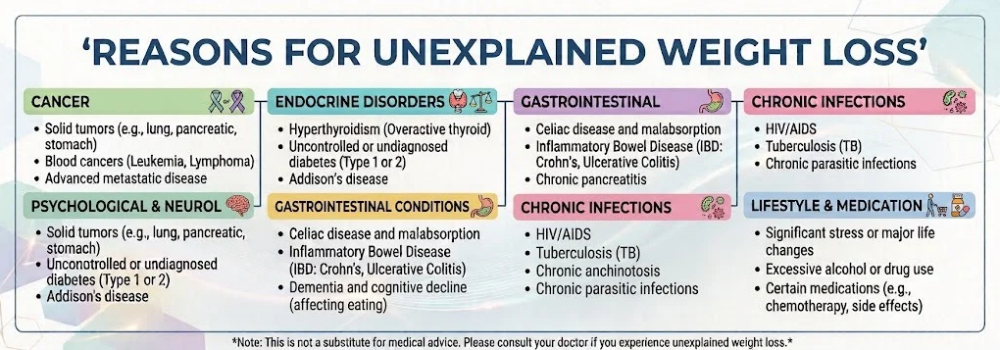
- 10 Possible Causes of Unexplained Weight Loss
- 1. Diabetes
- 2. Overactive Thyroid
- 3. Digestive Disorders
- 4. Cancer
- 5. Depression, Anxiety, and Other Mental Health Conditions
- 6. Medications and Substances
- 7. Long-Term Infections
- 8. Chronic Health Conditions
- 9. Reduced Appetite and Difficulty Eating
- 10. Problems Absorbing Nutrients
- Warning Signs You Should Not Ignore
- How Do Doctors Find the Cause?
- When Should You See a Doctor?
- Unexplained Weight Loss Care in Pearland
- Frequently Asked Questions
What Is Unexplained Weight Loss?
Unexplained weight loss means losing weight without intentionally changing your diet or exercise routine.
For example, you may eat your usual meals and maintain your normal activity level. Yet your weight continues to decrease over several weeks or months.
Weight naturally moves up and down. Small changes are common and may reflect hydration, food intake, activity, or temporary illness. A continued downward trend is different.
Unintentional weight loss may happen because you are eating less. It can also occur when your body uses more energy, cannot absorb nutrients properly, or is affected by an underlying disease.
Sometimes more than one factor is involved. A person may have a reduced appetite because of illness while also experiencing changes in metabolism.
This is why unexplained weight loss should be considered in the context of your other symptoms, medical history, medications, appetite, and daily habits.
How Much Unintentional Weight Loss Is Concerning?
There is no single number that applies perfectly to everyone. However, healthcare professionals often consider losing more than 5% of your usual body weight over about 6 to 12 months without trying to be clinically important.
For example, if you normally weigh 160 pounds, 5% is 8 pounds. If you normally weigh 200 pounds, 5% is 10 pounds.
That does not mean every person who loses this amount has a serious illness. It means the change is large enough to deserve medical attention when it was not intentional.
Timing matters too. Losing several pounds over a short period may be more concerning than a small change over many months. Your age and overall health also affect how your doctor interprets the change.
Older adults may experience clinically important weight loss at smaller amounts. Ongoing medical conditions can also make unexpected weight changes more important.
10 Possible Causes of Unexplained Weight Loss
There are many possible explanations for unintentional weight loss. Some are relatively simple to address. Others require testing and treatment.
Here are 10 important possibilities to discuss with a healthcare professional.
1. Diabetes
Diabetes is one possible cause of unexplained weight loss.
When blood glucose stays too high, the body may not be able to use glucose effectively for energy. In some cases, the body begins breaking down fat and muscle for fuel.
Unexplained weight loss can occur with diabetes along with increased thirst, frequent urination, increased hunger, fatigue, or blurred vision.
Weight loss can be particularly noticeable when diabetes has not yet been diagnosed.
Type 1 diabetes can develop quickly and may cause increased urination, thirst, increased eating, and weight loss. Type 2 diabetes often develops more slowly, and some people have few or no obvious symptoms.
If weight loss occurs along with extreme thirst or frequent urination, it is worth discussing blood glucose testing with your healthcare professional.
You can also learn more about diabetes care in Pearland if you are concerned about blood sugar symptoms.
2. Overactive Thyroid
Your thyroid helps regulate how your body uses energy. When the thyroid produces too much hormone, metabolism can speed up.
This condition is called hyperthyroidism.
Someone with hyperthyroidism may lose weight despite eating normally or even eating more than usual. Other symptoms can include a fast or irregular heartbeat, nervousness, trouble sleeping, sweating, heat intolerance, shaky hands, muscle weakness, and frequent bowel movements.
These symptoms do not prove that an overactive thyroid is causing the weight loss. Several other conditions can create similar symptoms.
Doctors may use thyroid blood tests to evaluate how the thyroid is functioning. Additional testing may be needed to identify the underlying cause.
3. Digestive Disorders
Your digestive system has to break down food and absorb nutrients. Problems anywhere along this process can sometimes contribute to unintended weight loss.
Conditions associated with weight loss can include celiac disease, inflammatory bowel disease, and peptic ulcer disease.
Digestive symptoms may provide important clues.
You may notice persistent diarrhea, abdominal pain, bloating, nausea, vomiting, changes in bowel habits, or feeling full quickly.
Some people also eat less because they associate food with discomfort. Over time, this can lead to inadequate calorie intake and continued weight loss.
If unexplained weight loss occurs with persistent digestive symptoms, do not simply assume that you have a food intolerance. A medical evaluation can help determine what is actually happening.
4. Cancer
Cancer is one possible cause of unexplained weight loss, but weight loss alone does not mean that you have cancer.
Several cancers can be associated with unintended weight loss. Mayo Clinic lists cancers involving the digestive tract, kidney, liver, pancreas, and lymphatic system among possible causes.
Weight loss related to cancer may occur because appetite changes, the body uses energy differently, or the disease affects how the body processes nutrients.
Other symptoms depend on the type and location of the cancer. These may include persistent pain, unusual bleeding, changes in bowel habits, persistent cough, difficulty swallowing, a new lump, fever, or night sweats.
Having one of these symptoms does not automatically mean cancer is present. Many non-cancerous conditions can cause similar problems.
The important point is that persistent unexplained weight loss should not be ignored. A healthcare professional can review your symptoms and determine whether further testing or screening is appropriate.
Regular preventive care can also help keep recommended health screenings on schedule.
5. Depression, Anxiety, and Other Mental Health Conditions
Mental health can affect appetite, eating patterns, sleep, energy, and body weight.
Depression may cause some people to lose interest in food. Anxiety can also change appetite or make eating difficult.
Other mental health conditions and eating disorders can contribute to unintended weight changes. Mayo Clinic also lists mood disorders and substance use disorders among possible causes.
This does not mean weight loss is simply “in your head.” Changes in appetite and eating are real physical effects that can accompany mental health conditions.
If weight loss occurs alongside persistent sadness, loss of interest in normal activities, severe anxiety, social withdrawal, sleep changes, or major appetite changes, tell your healthcare professional.
A complete evaluation can look at both physical and mental health factors.
6. Medications and Substances
Sometimes the explanation is found in a medication, supplement, or substance use pattern.
Certain medications can affect appetite, taste, digestion, or how much food you want to eat. Alcohol and other substances can also affect nutrition and body weight.
Mayo Clinic recommends reviewing prescription medicines, dietary supplements, herbal products, alcohol, tobacco, and other substance use when evaluating unexplained weight loss.
If your weight began changing after starting a new medication, do not stop taking the medication on your own.
Instead, tell your healthcare professional when the weight loss started and provide a complete list of everything you take.
This includes prescription medicines, over-the-counter products, vitamins, supplements, and herbal products.
7. Long-Term Infections
Some persistent infections can contribute to weight loss.
When the immune system remains active for an extended period, the body may use more energy. Appetite can also decrease during illness.
Depending on the condition, symptoms may include fever, night sweats, fatigue, cough, diarrhea, or swollen lymph nodes.
Examples of long-term conditions associated with unintended weight loss include tuberculosis and HIV/AIDS.
These conditions are not the most likely explanation for every case of weight loss. The risk depends on your symptoms, medical history, exposures, travel, and other factors.
A healthcare professional can determine whether infection testing is appropriate.
8. Chronic Health Conditions
Some long-term medical conditions can gradually cause unintended weight loss.
Examples include chronic obstructive pulmonary disease, advanced kidney disease, heart failure, and cirrhosis.
Chronic illness can affect appetite, energy needs, physical activity, digestion, and the body’s ability to maintain muscle.
For example, breathing problems can make eating tiring for some people. Chronic digestive or liver conditions can affect how nutrients are processed. Long-term illness can also reduce appetite.
If you already have a chronic condition and notice an unexpected change in weight, tell the healthcare professional managing your care.
Ongoing monitoring may help identify changes before they become more serious.
Important Note
Do not assume unexplained weight loss is caused by stress, a busy schedule, or simply having a fast metabolism. Those factors can affect weight, but persistent unintentional loss deserves a closer look, especially when other symptoms are present.
9. Reduced Appetite and Difficulty Eating
Sometimes the reason for weight loss is not a disease that directly changes metabolism. Instead, you may simply be eating less than your body needs.
This can happen for many reasons.
- Loss of appetite
- Dental pain
- Difficulty chewing
- Problems swallowing
- Changes in taste or smell
- Feeling full after small meals
- Nausea
- Persistent stress
- Limited access to food
- Difficulty preparing meals
Dental problems and poorly fitting dentures can make eating difficult. Social and financial factors can also affect access to food and meal preparation.
These causes are sometimes overlooked because they do not always feel like a medical problem.
Still, inadequate nutrition can lead to muscle loss, weakness, fatigue, and nutritional deficiencies if it continues.
10. Problems Absorbing Nutrients
You can eat enough food and still lose weight if your digestive system cannot properly absorb nutrients.
This is known as malabsorption.
Conditions such as celiac disease and inflammatory bowel disease can interfere with normal digestion or nutrient absorption.
Possible clues include chronic diarrhea, bloating, abdominal discomfort, greasy or unusual stools, fatigue, and signs of nutritional deficiency.
The exact symptoms depend on the underlying condition.
If you have persistent digestive symptoms together with unexplained weight loss, medical testing can help identify whether absorption problems are involved.
Warning Signs You Should Not Ignore
Unexplained weight loss becomes more concerning when it occurs alongside other changes in your health.
Make a medical appointment if you notice unexplained weight loss with:
- Persistent fatigue or weakness
- Loss of appetite
- Persistent diarrhea or vomiting
- Abdominal pain
- Difficulty swallowing
- Increased thirst or frequent urination
- Rapid or irregular heartbeat
- Persistent cough
- Fever or night sweats
- Blood in the stool or urine
- Unexplained bleeding
- A new lump or swelling
- Significant changes in bowel habits
- Persistent sadness or major mood changes
These symptoms have many possible causes. They do not automatically indicate a serious disease.
However, the combination of symptoms can help your healthcare professional decide which conditions should be investigated first.
Seek urgent medical care for severe symptoms such as difficulty breathing, fainting, severe chest pain, vomiting blood, significant bleeding, or severe abdominal pain.
How Do Doctors Find the Cause of Unexplained Weight Loss?
Finding the cause usually starts with a detailed conversation.
Your healthcare professional may ask when the weight loss began and how quickly it has happened. They may also ask about your appetite, eating habits, exercise, bowel movements, medications, supplements, sleep, mood, and other symptoms.
Your medical history matters too.
Your healthcare professional may ask about diabetes, thyroid problems, digestive conditions, infections, cancer screenings, and other health concerns.
A physical examination can provide additional information.
Depending on your symptoms, your healthcare professional may order blood or urine tests. These tests can provide information about blood glucose, thyroid function, blood counts, kidney function, liver function, inflammation, or nutritional status.
Additional testing may be recommended based on your symptoms and initial results. This may include imaging or other specialized tests.
Not everyone needs an extensive battery of tests. The evaluation should be guided by your symptoms, medical history, physical findings, and risk factors.
Keeping track of your weight can also help. If possible, record your weight under similar conditions and note major changes in appetite, diet, activity, and symptoms.
Bring a list of medications and supplements to your appointment.
When Should You See a Doctor for Unexplained Weight Loss?
If you are losing weight without trying, it is reasonable to discuss the change with a healthcare professional.
You should be especially proactive if you have lost more than 5% of your body weight over 6 to 12 months without intending to do so.
Do not wait if the weight loss is continuing or happening quickly.
You should also make an appointment sooner if the weight loss comes with other symptoms such as persistent digestive problems, increased thirst, frequent urination, persistent fever, night sweats, significant fatigue, pain, or changes in appetite.
If you already have a chronic health condition, tell the healthcare professional who manages it about the change.
Early evaluation does not mean that your doctor will assume the worst. It simply gives you an opportunity to identify the cause and address it appropriately.
Sometimes testing finds a clear medical condition. Sometimes the cause is related to appetite, medications, lifestyle, or another manageable factor. In some cases, no immediate cause is found and your healthcare professional may recommend monitoring your weight and symptoms over time.

Unexplained Weight Loss Care in Pearland
Unexplained weight loss deserves attention, especially when it continues without a clear reason.
Pearland Healthcare Center provides primary care for patients in Pearland and surrounding communities. A primary care evaluation can help review unexpected weight changes, related symptoms, medications, chronic conditions, and preventive health needs.
The clinic also provides chronic disease management in Pearland for patients who need ongoing care for long-term health conditions.
If your weight loss is accompanied by increased thirst or frequent urination, you can also learn more about diabetes care in Pearland.
For patients who need a broader health assessment, an annual physical exam in Pearland can provide an opportunity to review overall health, preventive care, and ongoing concerns.
If you are ready to discuss unexplained weight loss with a healthcare professional, you can make an appointment at Pearland Healthcare Center.
Frequently Asked Questions About Unexplained Weight Loss
What is considered unexplained weight loss?
Unexplained weight loss means losing weight without intentionally changing your diet, exercise, or other weight-loss habits. Healthcare professionals often consider losing more than 5% of your usual body weight over 6 to 12 months without trying to be clinically important.
When should I worry about unexplained weight loss?
You should discuss unexplained weight loss with a healthcare professional, particularly if you have lost more than 5% of your body weight within 6 to 12 months. Seek evaluation sooner if weight loss is rapid, continues without explanation, or occurs with other concerning symptoms.
Can diabetes cause unexplained weight loss?
Yes. Unexplained weight loss can be a symptom of diabetes. It may occur with increased thirst, frequent urination, increased hunger, fatigue, or blurred vision.
Can thyroid problems cause weight loss?
Yes. Hyperthyroidism can cause weight loss despite increased appetite. Other symptoms can include rapid or irregular heartbeat, sweating, heat intolerance, shaky hands, trouble sleeping, and frequent bowel movements.
Can stress cause unexplained weight loss?
Stress can affect appetite, eating patterns, sleep, and daily habits, which may contribute to weight loss. However, persistent unexplained weight loss should not automatically be blamed on stress. A healthcare professional can help determine whether another medical or nutritional cause is involved.
Does unexplained weight loss always mean cancer?
No. Cancer is one possible cause, but many other conditions can cause unexplained weight loss. These include diabetes, hyperthyroidism, digestive disorders, chronic illness, medication effects, reduced appetite, and mental health conditions.
Can digestive problems cause unexplained weight loss?
Yes. Conditions that affect digestion or nutrient absorption can cause weight loss. Examples include celiac disease and inflammatory bowel disease. Persistent diarrhea, abdominal pain, bloating, or other digestive symptoms can provide useful clues.
What tests are done for unexplained weight loss?
The tests depend on your symptoms and medical history. A healthcare professional may begin with a physical examination and blood or urine tests. Additional testing, such as imaging or specialized studies, may be recommended when the initial evaluation suggests a specific cause.
Should I see a doctor if I lose weight but feel fine?
Yes, especially if the weight loss is persistent or exceeds about 5% of your usual body weight over 6 to 12 months. Some medical conditions cause few symptoms in their early stages. An evaluation can help determine whether the weight change needs further investigation.
Can unexplained weight loss be treated?
Treatment depends on the cause. If weight loss results from diabetes, thyroid disease, digestive problems, medication effects, or another condition, treating the underlying problem may help stabilize your weight. Your healthcare professional may also recommend nutritional support when needed.
Final Thoughts: Do Not Ignore Unexplained Weight Loss
Unexplained weight loss is not always a sign of something serious. But persistent weight loss without an intentional change in diet or activity should not be ignored.
The possible causes range from reduced appetite and medication effects to diabetes, thyroid disease, digestive disorders, chronic illness, infections, mental health conditions, and cancer.
The good news is that a medical evaluation can help narrow down the possibilities. Your healthcare professional can look at the amount and timing of the weight loss, your other symptoms, medications, medical history, and overall health.
If you have been losing weight without trying, especially if the change is continuing or accompanied by other symptoms, schedule an evaluation rather than waiting for the problem to resolve on its own.
Concerned About Unexplained Weight Loss?
Pearland Healthcare Center provides primary care for patients in Pearland and surrounding communities. Talk with a healthcare professional about unexpected weight changes, related symptoms, and your overall health.
Medical Disclaimer:
This article is for general educational purposes only and does not replace professional medical advice, diagnosis, or treatment. Unexplained weight loss can have many causes. If you are losing weight without trying, speak with a qualified healthcare professional for an appropriate evaluation. Seek urgent medical care for severe symptoms such as difficulty breathing, fainting, severe chest pain, severe abdominal pain, or significant bleeding.